


Jeep Ram lease vs finance offers explained
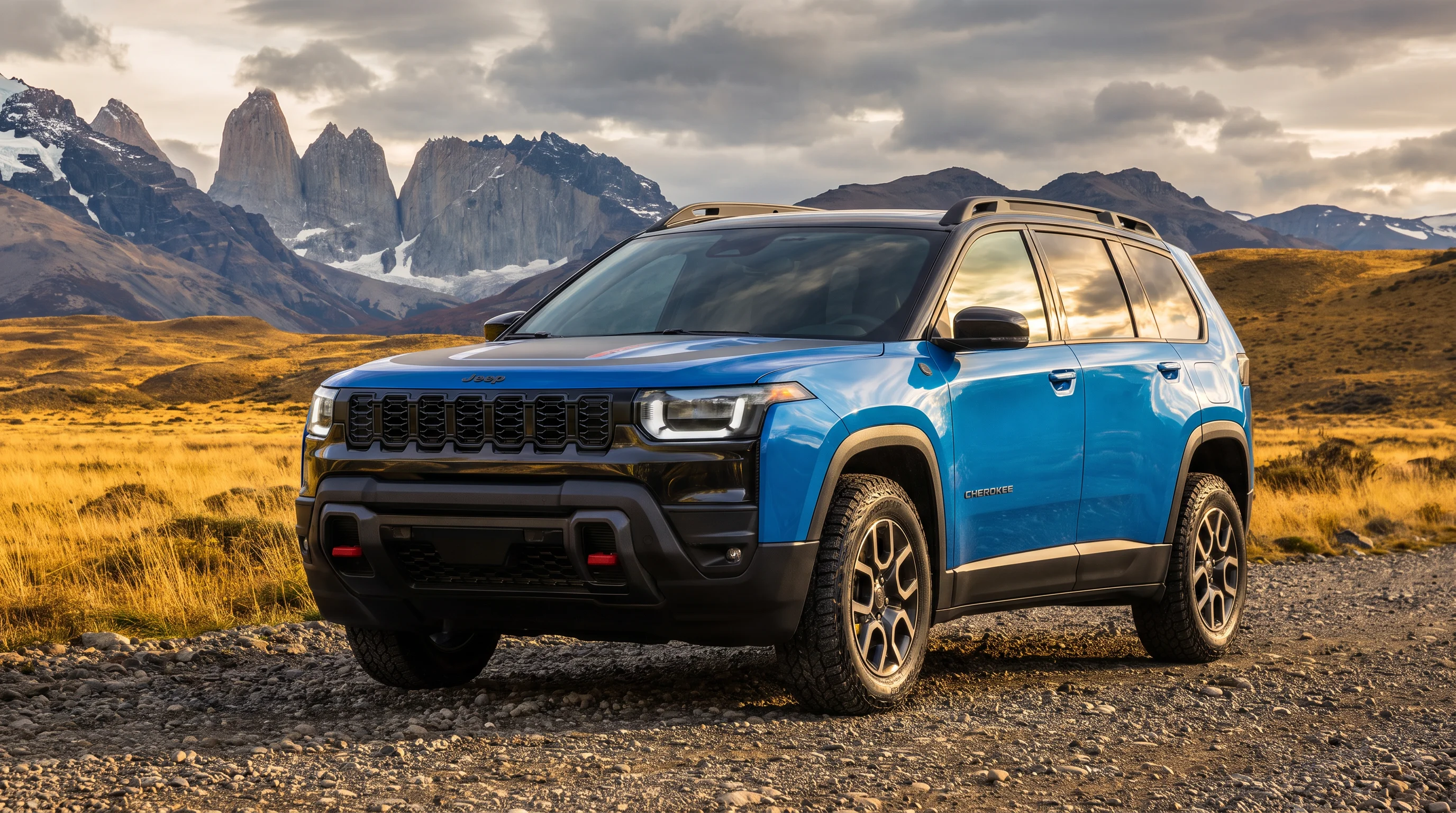
Deciding whether to lease or finance a 2026 Ram 1500 or 2026 Jeep Grand Cherokee comes down to three things: your annual mileage, how you actually use the vehicle, and how long you plan to keep it. Leasing reduces your monthly cash outlay and lets you step into a new vehicle every few years. Financing builds ownership equity, removes mileage limits, and takes turn-in condition guidelines out of the equation entirely. Drivers who want a lower monthly commitment and a shorter renewal cycle usually come out ahead with a lease, while high-mileage drivers and anyone who works or modifies their vehicle hard are better served by ownership through financing.
Below, our finance team breaks down how the two contract structures actually differ: the interest math, the upfront costs, the mileage caps, and what happens when the lease ends.
Is It Better to Lease or Finance a Ram 1500 or Jeep Grand Cherokee?
The 2026 Ram 1500 covers everything from daily personal transportation to jobsite towing and cargo hauling. If your truck is dedicated to heavy work duty, commercial trailering, or aftermarket alterations such as utility racks and spray-in bed liners, financing is generally the stronger route. It removes wear-and-use guidelines and excess mileage charges from the picture completely. A personal-use truck driver who keeps annual travel inside a set limit can take the other side of that trade, using a shorter lease term to get into a fresh cabin, updated infotainment, and current safety technology on a regular cycle.
The 2026 Jeep Grand Cherokee presents the same decision for family transportation and regional travel. Lease terms on Jeep and Ram models commonly run from 24 to 42 months, with annual mileage allowances set at 10,000, 12,000, or 15,000 miles, keeping a family in modern cabin comforts and active safety features through the core factory warranty window.¶ Buyers who plan to keep an SUV for six to ten years, though, build more long-term value with a standard auto loan.
¶ Driver-assist and safety systems are supplemental aids and are not a substitute for safe, attentive driving. Their effectiveness depends on weather, road, and traffic conditions and other factors. Always obey traffic laws and stay attentive to the road. See your owner's manual for system details and limitations.
Leasing and Financing Side by Side
| Leasing | Financing | |
|---|---|---|
| Monthly payment | Lower monthly cash outlay | Higher monthly outlay for the same vehicle |
| Annual mileage | Capped at 10,000, 12,000 or 15,000 miles per year | No mileage limit |
| Wear and modifications | Turn-in condition guidelines apply | No turn-in guidelines; modifications are yours to make |
| Form of interest | Money factor, charged on the capitalized cost plus the residual value | APR, simple interest against the declining principal balance |
| Rate changes later | Money factor is fixed once the contract is finalized | You can refinance if market rates or your credit improve |
| Equity | None unless you exercise the buyout | Builds ownership equity with each payment |
| End of term | Return the vehicle, or buy it at the pre-determined residual value | You own the vehicle outright |
| Best suited to | A lower monthly commitment, a short renewal cycle and predictable annual mileage | High-mileage driving, heavy work use, aftermarket changes, and six-to-ten-year ownership |
Our finance team regularly sees buyers weigh monthly lease commitments against long-term loan amortization when choosing between full-size trucks and mid-size SUVs. Comparing the total amount paid across the full vehicle lifecycle, rather than the monthly figure alone, is what clarifies which structure fits your household budget. You can see what is on the ground right now in our new Jeep inventory and new Ram inventory.
Money Factor vs. APR: How Lease and Loan Interest Differ
Financing applies an Annual Percentage Rate to the full loan balance. Leasing uses a money factor instead, and the two are not quoted in comparable units, which is exactly why lease sheets are harder to read than finance contracts. To convert a money factor into an equivalent APR, multiply the decimal by 2,400.
| Money factor | Equivalent APR |
|---|---|
| 0.00050 | 1.2% |
| 0.00100 | 2.4% |
| 0.00125 | 3.0% |
| 0.00150 | 3.6% |
| 0.00200 | 4.8% |
| 0.00250 | 6.0% |
| 0.00300 | 7.2% |
- Standard financing charges simple interest against the remaining principal balance each month, so the interest portion shrinks as the loan is paid down.
- A lease finance charge is calculated on the capitalized cost plus the residual value, not on a declining balance, so it does not shrink the same way.
Credit scores heavily dictate the rate tiers captive lenders offer. Borrowers in the top tiers gain access to promotional finance rates and to tier-one money factors, both of which reduce the finance component of the monthly payment. Promotional rates change frequently and are specific to model, trim, and term, so current offers are always listed on our new vehicle specials page rather than quoted here.
Captive lenders evaluate credit history, debt-to-income ratio, and payment consistency when assigning those tiers. One structural difference is worth knowing before you sign: a strong credit profile lowers your cost under either contract, but financing leaves the door open to refinancing later if market rates or your own credit improve. A lease money factor is fixed for the life of the agreement once the contract is finalized.
Cited Source: Federal Reserve Board — Keys to Vehicle Leasing: rent charge, money factor and capitalized cost
Down Payments, Upfront Costs, and Mileage Caps on Jeep and Ram Leases
What You Pay at Signing
Jeep and Ram lease contracts require upfront capital for the first monthly payment, the acquisition fee, and any optional down payment, paired with a pre-set annual mileage cap, typically 10,000, 12,000, or 15,000 miles per year. Choosing a higher allowance raises the monthly payment slightly, because it lowers the vehicle's projected residual value, but it protects you from excess-mileage charges at turn-in.
- Capitalized cost reduction: an optional or promotional cash down payment that directly lowers the net balance being leased.
- Acquisition fee: a one-time lender charge for originating the lease agreement.
- Initial fees: state registration, titling, and documentation charges due at signing.
Model and trim selection drive the whole lease structure, because the capitalized cost starts from the vehicle's price. Higher trims carry a higher baseline capitalized cost, though their stronger resale demand helps preserve residual percentages. Current pricing by trim is listed with our new Jeep and Ram inventory.
Choosing an Annual Mileage Allowance
Mileage limits matter most for drivers commuting from Waterford and the surrounding communities. An honest calculation of your annual driving before you sign keeps the contract aligned with real usage and avoids per-mile adjustments at turn-in.
Cited Source: Federal Reserve Board — Keys to Vehicle Leasing: mileage limits and residual value
Buying Your Jeep or Ram at Lease End
Every standard Jeep and Ram lease includes an explicit contractual buyout option that lets you purchase the vehicle at the end of the term for its pre-determined residual value. Exercising the buyout moves the vehicle into full ownership and removes the excess mileage and wear charges that would otherwise apply at turn-in.
What the Buyout Costs
As the lease nears its end, the question is whether the residual price printed on your original contract still represents good market value. If comparable pre-owned vehicles are selling above your residual, buying out the lease captures that equity. If market values have fallen below the residual projection, you can hand the vehicle back and walk away from the depreciation.
The buyout itself means paying a payoff amount made up of the residual value, any remaining lease payments, outstanding fees, a purchase option fee and applicable taxes. You can pay that balance outright or finance it through a bank or captive lender over a multi-year term. For anyone who has kept up with routine maintenance, added accessories, or run past the original mileage cap, buying the vehicle is the cleanest way to keep driving something whose history you already know. Our finance department can structure the buyout either way.
Cited Source: Stellantis Financial Services — End of Lease Guide, purchase option and payoff composition
Common Questions About Jeep and Ram Leasing and Financing
How does a trade-in affect my down payment on a new Ram lease?
Applying a trade-in toward a new Ram lease acts as a capitalized cost reduction, directly lowering the gross capitalized cost of the contract. That reduction lowers your monthly payment without requiring out-of-pocket cash at signing. Equity beyond the required drive-off fees can instead come back to you as cash or be applied toward initial taxes and processing fees.
Can I extend my Jeep lease term if my new vehicle order is delayed?
Captive finance providers frequently offer month-to-month lease extensions, which preserve your original monthly payment and a pro-rated mileage allowance while a replacement vehicle is built and shipped. Extensions are subject to lender approval and the terms are set by the lender rather than the dealership, so confirm availability directly before you count on one. Contacting our finance desk during your final lease quarter ensures the paperwork is in place before the term runs out.
Are routine maintenance costs covered under a standard Jeep or Ram lease?
Standard lease agreements leave the lessee responsible for scheduled maintenance, including engine oil changes, tire rotations, and general inspections. Factory coverage runs 3 years or 36,000 miles for the Basic Limited Warranty and 5 years or 60,000 miles for the Powertrain Limited Warranty, whichever comes first, so mileage matters as much as time: a 36-month lease at a 15,000-mile annual allowance reaches 45,000 miles and passes the bumper-to-bumper limit before the term ends.‖ Scheduled maintenance packages can also be built into the contract at lease inception.
‖ This information is provided for general educational purposes only and does not constitute legal advice. Warranty coverage depends on the specific terms of your vehicle's warranty agreement. Consult your owner's manual or a qualified legal professional for guidance on your individual situation.
Cited Source: Mopar — current model year warranty coverage
What happens if I exceed my agreed annual mileage limit on a Ram truck?
Exceeding the limit results in a per-mile charge at turn-in, at the rate stated in your original contract. If you expect to run past the allowance mid-lease, the buyout at term end is the usual remedy. Purchasing the truck removes the excess mileage charge, because turn-in standards no longer apply once you take ownership.
What documentation should I bring to prequalify for auto financing?
To move through prequalification quickly, bring recent pay stubs or other proof of income, a valid driver's license, proof of residence such as a recent utility bill, and current auto insurance information. Having those documents organized lets our finance team submit your file promptly.
Choosing the Right Contract for Your Next Jeep or Ram
Choosing between leasing and financing comes down to aligning your driving patterns, your monthly payment target, and your ownership plans with the right contract structure. A lease keeps the monthly commitment lower and the renewal cycle short. A loan builds equity and leaves you holding an asset at the end. Neither is universally better, and the deciding factors are usually how many miles you drive and how long you intend to keep the vehicle.
Our finance team can walk you through side-by-side payment breakdowns, credit terms, and trade-in evaluations. Call 262-684-1242 or stop by 282 East Wolf Run in Mukwonago to review your options in person. If credit history has made financing difficult before, Lynch Fresh Start Financing is built for that situation.
Disclaimers
¶ Driver-assist and safety systems are supplemental aids and are not a substitute for safe, attentive driving. Their effectiveness depends on weather, road, and traffic conditions and other factors. Always obey traffic laws and stay attentive to the road. See your owner's manual for system details and limitations.
‖ This information is provided for general educational purposes only and does not constitute legal advice. Warranty coverage depends on the specific terms of your vehicle's warranty agreement. Consult your owner's manual or a qualified legal professional for guidance on your individual situation.
Cited Sources
Federal Reserve Board — Keys to Vehicle Leasing: rent charge, money factor and capitalized cost
Federal Reserve Board — Keys to Vehicle Leasing: mileage limits and residual value
Stellantis Financial Services — End of Lease Guide, purchase option and payoff composition
Mopar — current model year warranty coverage